
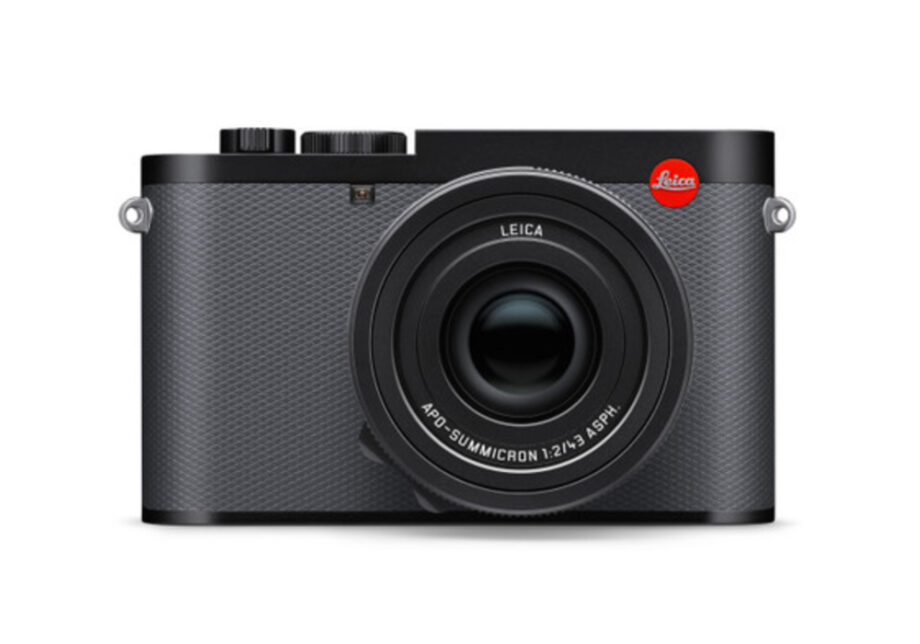
The Leica Q3 43 is the fixed-lens compact camera for people who’ve stopped compromising. Built around a brand-new APO-Summicron 43mm f/2 lens and a 60-megapixel full-frame BSI-CMOS sensor, it pairs extraordinary optical precision with the kind of tactile, pared-back handling that makes you want to actually use the thing. For street, travel, and portrait work, it may well be the most satisfying camera you can carry daily.
The conversation around the Leica Q3 43 starts in an unusual place: a number. At 43mm, the lens diagonal equals that of a full-frame sensor, which means 43mm falls precisely between slightly wide and slightly telephoto. It’s neither the subtle pull of 35mm nor the gentle compression of 50mm. It’s the view through an unmodified human eye.
That’s the thesis behind this camera. The 43mm focal length is commonly regarded as most akin to the natural perspective of the human eye and, by many, as the most pleasing focal length. Leica hasn’t simply updated the Q3; it’s offered an alternative to it, one that reframes how a photographer sees.
The Q3 43 was announced on 26 September 2024, marking the first time the Q series has departed from the 28mm Summilux since the original Q launched in 2015. That’s nine years of one vision. Changing it required conviction.
A lens worth the argument
Everything that matters here starts with the glass. The APO-Summicron 43mm f/2 ASPH is a completely new design comprising 11 elements in 8 groups, including 7 aspherical surfaces. The APO designation indicates an apochromatic design that optimizes sharpness and minimizes longitudinal chromatic aberration.
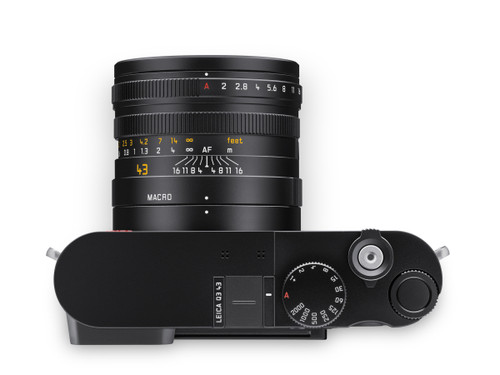
High resolution, contrast, and sharpness extend right into the corners of the image, even at full aperture. Chromatic aberrations and other image errors are minimized by the apochromatic design. Reviewers who’ve spent time with the camera describe the effect as immediately apparent in the field, with very little effort required to trigger the lens’s best performance.
For context: the APO-Summicron-M 50mm lens retails at around USD $9,945 on its own. The Q3 43 bundles an optically comparable APO-Summicron with a 60MP full-frame body. That framing matters when assessing what the camera actually delivers per dollar.
The macro mode adds practical range. In the lens’s standard configuration, the minimum focus distance is 60cm, but in Macro mode, that drops to a much closer 27cm. Combined with the sensor’s 60MP resolution, this opens up a category of close-up work that a typical “compact” camera simply can’t manage.
The body: nothing new, nothing unnecessary
Leica made no cosmetic changes to the Q3 43, aside from two details. The body is identical to the original Q3, save for a stylish grey leatherette finish and a “43” engraved into the hotshoe. For fans of the Q series, this is a feature, not a limitation. The formula works.
The body uses magnesium die-cast construction with a beautifully pared-back design and wonderfully tactile control layout. The resistance of the manual focus ring, the weight distribution in-hand, the shutter speed dial on top: none of it has been changed because none of it needed to be. Even the macro ring, which twists to reveal a different set of markings for close-up focusing, is so enjoyable to use that it could make a photographer forget that the Q3 43 also offers excellent autofocus.
IP52 ingress protection keeps the camera functional in light rain, dust, and the general wear and tear of travel. The 5.76MP OLED viewfinder remains one of the sharpest available in any camera at this size. A tilting 3-inch rear display accommodates lower or higher angles without forcing an awkward grip.
Specs at a glance
| Feature | Specification |
|---|---|
| Sensor | 60.3MP full-frame BSI-CMOS |
| Lens | APO-Summicron 43mm f/2 ASPH (fixed) |
| Digital zoom range | 43mm to 150mm |
| ISO range | 50 to 100,000 |
| Autofocus | Phase Detection + Contrast + Depth from Defocus + AI |
| Viewfinder | 5.76MP OLED |
| Display | 3″ tilting touchscreen |
| Video | Up to 8K, ProRes and H.265 support |
| Weather sealing | IP52 |
| Connectivity | USB-C, HDMI, Leica FOTOS app (iOS and Android) |
| Body dimensions | 130 x 80.3 x 97.6mm, 772g with battery |
| Build | Handmade in Germany |
What it’s built for
This camera earns its place in three specific scenarios:
- Street and travel photography: The 43mm view keeps subjects proportional and natural-looking without the distortion that wider angles introduce at close range. Combined with the compact body, it disappears into a bag or hangs comfortably on a strap.
- Portrait work: The 43mm focal length is perfect for portraits, offering the compression and subject separation that makes the field of view feel flattering rather than intrusive.
- Versatile everyday use: The 60MP sensor and digital crop modes give the camera flexibility resembling multiple lenses, with crops extending coverage from 43mm to 150mm equivalent while retaining usable resolution.
The Leica FOTOS app enables wireless image transfer, remote control, and location tagging via a paired iPhone or iPad. It’s a practical addition that reduces manual file management without introducing unnecessary complexity to the shooting experience.
Where it’s honest about its limits
No camera at this level should escape scrutiny, and the Q3 43 has a few well-documented shortcomings worth naming plainly.
The autofocus is quite good, but not as fast or as reliable as Leica’s own SL3-S. High-ISO performance follows a similar pattern: the 60MP sensor’s smaller pixels mean its low-light capability lags behind that of lower-resolution, larger-pixel sensors. For photographers coming from a Sony A7S III or similar low-light specialist, the Q3 43 will feel like a trade-off in available darkness.
Video modes and autofocus performance don’t fully live up to the camera’s otherwise immense standards, though neither gets in the way of its core mission. This is, fundamentally, a still camera. The 8K video capability is real and functional, but it shouldn’t be the primary reason anyone buys this camera.
Battery life is average for the category, which means carrying a spare on longer shoots is a reasonable precaution rather than a luxury.
Precision at a price
The Q3 43 exists in a category it largely defines on its own terms. There is no other camera with this particular combination: a 60-megapixel full-frame sensor paired with a top-quality 43mm prime, an excellent viewfinder, all in a compact, well-built, weatherproof body. The long-discontinued Sony RX1R II remains the only conceptual peer, and it hasn’t been updated since 2016.
For photographers who’ve spent years chasing this kind of integration across interchangeable-lens systems, the Q3 43 offers something different: resolution. Not in megapixels, but in what you actually need. A single, well-chosen focal length. A sensor that doesn’t limit the glass above it. A body that gets out of the way.
Even more so than the standard Q3, the Q3 43 feels like the perfect everyday camera. That’s a specific kind of endorsement from reviewers who shoot with equipment across the full price spectrum. It doesn’t mean this camera is without compromise. It means those compromises align with what a thoughtful, experienced photographer actually values. The Q3 43 doesn’t ask you to think about gear. It asks you to look.